
Illness-Wellness Continuum and Salutogenesis in Vision Care
Illness-Wellness Continuum and Salutogenesis in Vision Care
October 11, 2026
Rev. Leonidas “The Optometrist” Johnson, OD
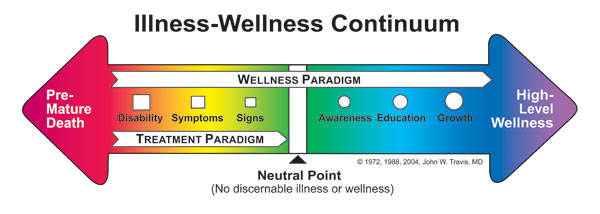
Illness-Wellness Continuum
The Illness-Wellness Continuum is a graphical model introduced by Dr. John W. Travis in 1972 (and published in 1975) that illustrates health as a dynamic, ongoing spectrum rather than a fixed state. [1, 2]
Core Structure of the Model
- The Neutral Point: Located in the middle of the continuum, it represents the absence of physical signs, symptoms, or disease. Traditional medicine often stops here, treating a patient until they are simply "not sick". [3, 4]
- The Left Side (The Treatment Paradigm): Moves from the neutral point toward worsening health states, including signs and symptoms, recognized disability, and ultimately premature death. The focus here is reactive—alleviating symptoms and curing disease. [5]
- The Right Side (The Wellness Paradigm): Moves past the neutral point toward higher levels of well-being through awareness, education, and personal growth. The focus here is proactive—improving lifestyle, nutrition, exercise, emotional resilience, and mindfulness to reach high-level wellness.
Key Takeaways
- Beyond the Absence of Illness: The model shows that being symptom-free does not automatically mean a person is truly well. An individual can be physically free of disease but still languishing, stressed, or unfulfilled. [6, 7, 8]
- Harmony of Both Paradigms: The treatment paradigm and wellness paradigm are not enemies; they work together. If a person is ill, treatment brings them back to the neutral point, while wellness practices help them continue moving toward optimal vitality. [9]
- A Fluid Process: Wellness is an active choice and a continuous journey rather than a static destination. [10, 11]
Salutogenic Ease / Dis-ease Continuum and Sense of Coherence
The salutogenic model of health is an interdisciplinary framework created by medical sociologist Aaron Antonovsky in 1979. Instead of asking "What causes disease?" (pathogenesis), it asks the salutogenic question: "What creates and maintains health?" [12, 13]
Core Concepts
- The Ease/Dis-ease Continuum: Health is not a simple binary (healthy vs. sick). Instead, people exist on a dynamic continuum between total health (ease) and total illness (dis-ease) at any given time. [14,15]
- Sense of Coherence (SOC): Antonovsky’s central construct, which measures an individual's view of life as predictable and manageable. It has three core dimensions:
- Comprehensibility: Believing that internal and external stimuli make cognitive sense and are structured rather than chaotic.
- Manageability: Believing that adequate resources (personal, social, or material) are available to meet life's demands.
- Meaningfulness: Feeling that life has an emotional and existential purpose, and that challenges are worth investing energy into. [16]
- Generalized Resistance Resources (GRRs): Biological, material, and psychosocial assets (such as income, social support, coping skills, and intelligence) that help people deal with stressors and build a stronger Sense of Coherence. [17]
- Stressors as Neutral/Manageable: Stress is viewed as a universal part of human life. Rather than being automatically destructive, stressors can be managed or even transformed into positive experiences if an individual has a strong SOC and proper resources. [18,19, 20, 21]
Pathogenesis vs. Salutogenesis
Feature
Pathogenic Model vs Salutogenic Model
Core Question
Pathogenic: What causes disease?
Salutogenic: What creates health?
View of Health
Pathogenic: Binary (Healthy or Sick)
Salutogenesis: Continuum (Ease to Dis-ease)
Focus
Pathogenic: Risk factors and pathology
Salutogenic: Salutary factors and resources
Approach
Pathogenic: Disease treatment and prevention
Salutogenic: Holistic, person-centered health promotion
Salutogenic Applications in Practice
The model is widely used in healthcare, nursing, and public health to: [22, 23]
- Reorient clinical care toward building patient resilience and personal strengths rather than just treating symptoms. [24]
- Guide health promotion campaigns (such as community mental health and wellness programs). [25]
- Support specialized settings like palliative care, vocational rehabilitation, and maternal health. [26]
The Illness-Wellness Continuum and Salutogenesis are holistic approaches to health. Holistic approaches to health focus on the whole person, body, soul, and spirit. Soul consists of emotions, mind, and volition. Volition is human will or will-power. Including the body, soul, and spirit in the delivery of health means we consider biological, psychological, sociological, and spiritual (Bio-Psycho-Socio-Spiritual) aspects of health and wellness. Helping patient move from disease and premature death to wellness and optimal health involves examining and making decisions about lifestyles. Making decisions about lifestyles involves physical, psychological (emotional, mental, social) and spiritual factors.
Optometrists, primary care vision providers, can detect subclinical microvascular changes in the eye before clinical manifestations or standard systemic/ organ damage blood biomarkers(like elevated serum creatinine or advanced renal/cardiac markers) become abnormal. The ability to detect diseases at a much earlier stage is possible using noninvasive advanced imaging technology called Optical Coherence Tomography Angiography (OCTA).
Because the optometrist can detect disease at a very early stage and has the ability to track and monitor disease progression at a microvascular and capillary level, the primary care eye provider can suggest that the patient make lifestyle changes (e.g. diet, exercise, stress management) to move the patient from illness toward wellness on the illness-wellness continuum. Lifestyle changes may include the decision to integrate Traditional Western Allopathic Medicine with Traditional East Asian Medicine (Acupuncture, Herbal Medicine, Tui Na Massage and Qi Gong/Tai Chi), Ayurvedic Medicine, various forms of Energy Medicine and other therapies such as hypnosis, biofeedback, and mindful meditation. These types of decisions are complicated and involve physical, emotional, mental, social and spiritual factors including a degree of democratization of health.
Notes:
1. https://www.ebsco.com/research-starters/religion-and-philosophy/illness-wellness-continuum/
2. https://www.thewellspring.com/wellspring/introduction-to-wellness/357/key-concept-1-the-illnesswellness-continuum.cfm.html
3. https://youtu.be/V1zlgF3Zq8E?si=5Peqf1QWk5SIGTXS
4. https://nursingbird.com/health-illness-continuum-review/
5. https://www.slideshare.net/slideshow/health-illness-continuum-80612835/80612835
6. https://www.psychologytoday.com/us/blog/theory-of-knowledge/202412/understanding-the-illness-wellness-continuum
7. https://www.scribd.com/presentation/654195559/helath-ilness-continuum
8. https://www.youtube.com/watch?v=KcMKrPCNf_s&t=118s
9. https://pmc.ncbi.nlm.nih.gov/articles/PMC7750840/
10. https://quizlet.com/study-guides/understanding-the-illness-wellness-continuum-37779964-e338-4f67-9f23-623ab5662407
11. https://quizlet.com/study-guides/illness-wellness-continuum-and-components-of-personal-health-acfb6798-343f-43d2-b16e-95b17c89876f
12. https://link.springer.com/rwe/10.1007/978-981-97-0821-5_3-1
13. https://www.ebsco.com/research-starters/psychology/salutogenesis/
14. https://www.jmirs.org/article/S1939-8654(23)00035-8/fulltext
15. https://www.physio-pedia.com/Salutogenic_Approach_to_Wellness
16. https://www.sciencedirect.com/topics/psychology/salutogenesis
17. https://www.sciencedirect.com/topics/medicine-and-dentistry/salutogenesis
18. https://en.wikipedia.org/wiki/Salutogenesis
19. https://pmc.ncbi.nlm.nih.gov/articles/PMC11524910/
20. https://youtu.be/XN1jPxzWCoE?si=G0761uso0i534w0l
21. https://www.sciencedirect.com/topics/social-sciences/salutogenesis
22. https://www.ncbi.nlm.nih.gov/books/NBK584127/
23. https://academic.oup.com/heapro/article/38/2/daad017/7118413
24. https://www.jmirs.org/article/S1939-8654(23)00035-8/fulltext
25. https://academic.oup.com/heapro/article/11/1/11/582748
26. https://www.ncbi.nlm.nih.gov/books/NBK584127/
More Articles




Stay informed, inspired, and ahead of the curve with expert tips, vision care insights, and holistic eye health updates — delivered straight to your inbox.